EPS Bead vs Mineral Fibre Cavity Insulation: Which Is Right for Your Warrington Home?
If you’ve had more than one quote for cavity wall insulation, you’ve probably noticed installers don’t all use the same material. The two you’ll hear about most are blown mineral fibre and EPS bead. Here’s how they compare, and why we usually recommend beads.
How cavity insulation works
Most houses built from the 1920s onwards have two leaves of brick or block with a gap between them. That gap was originally there to stop rain getting through to the inside wall — but an empty cavity does very little to stop heat escaping.
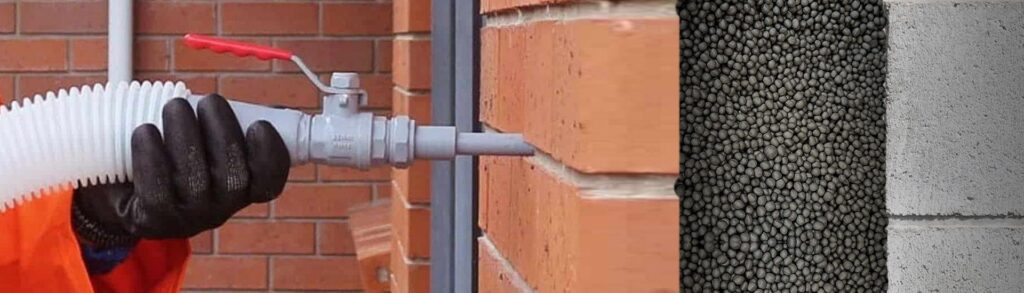
Filling it is done from outside: small holes are drilled in the mortar joints, the material is injected or blown in until the cavity is full, and the holes are made good. In most homes it’s a one-day job with no mess inside.
Blown mineral fibre
Mineral fibre has been used for decades and was widely installed under past government schemes. It’s cheaper as a material, but it has some drawbacks:
- it can absorb water if rain gets into the cavity, and wet insulation stops insulating
- it can settle over time, leaving cold spots at the top of the wall
- installation usually needs more drill holes
Where it’s gone wrong, we see damp patches on inside walls, cold corners and mould — which is why we also offer extraction of old cavity insulation.
EPS bead
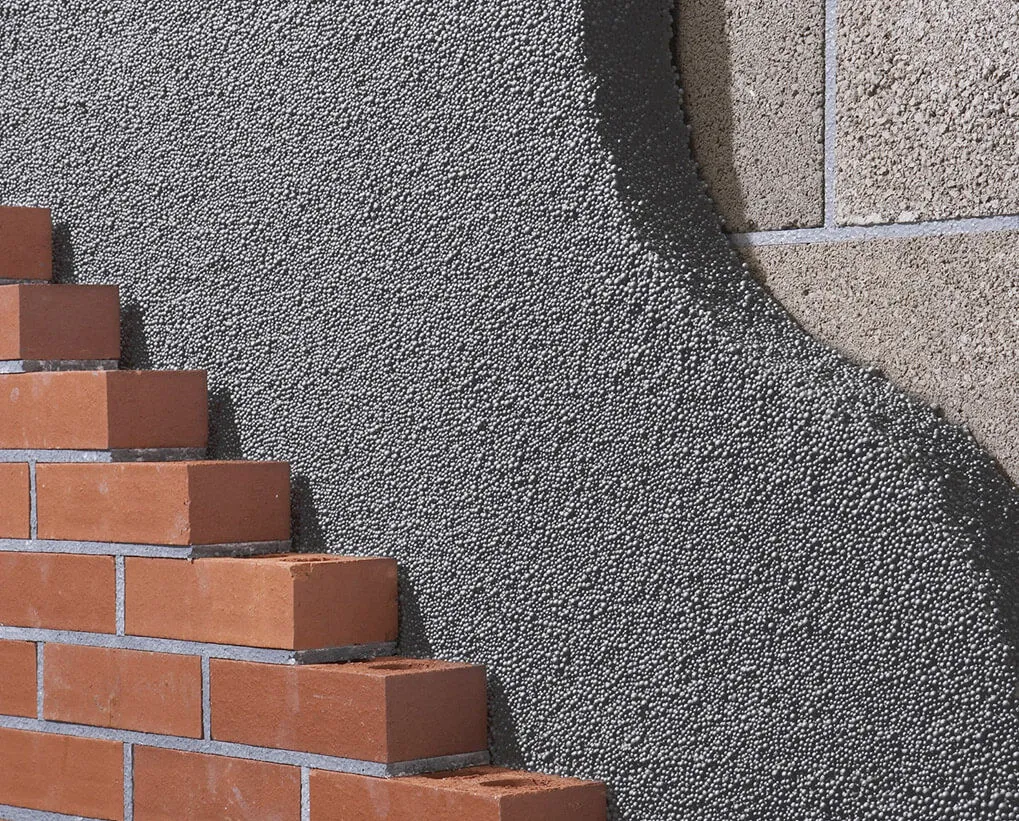
EPS bead insulation uses small polystyrene beads, injected with a bonding agent so they lock together as they fill the cavity. The benefits for a typical Warrington house:
- No moisture absorption. The beads don’t wick water across the cavity the way fibre can.
- Consistent fill. The bonded beads fill the cavity at an even density and don’t settle, so there are no cold spots.
- Better performance. Bead insulation can improve a wall’s U-value by up to 70%, outperforming standard fibre.
- Fewer, smaller holes. Less drilling in the face of the house.
- Lasts the life of the building. Beads are rot-proof and water-resistant.
It’s also efficient to install — there’s no need to fill gable peaks, which can save up to 15% on material, and those savings are reflected in the price.
Is my house suitable?
Most cavity-walled homes are, but not all. Properties on very exposed sites facing driving rain, walls with existing damp problems, or cavities full of old debris need checking first. That’s what the survey is for — we’ll look at the walls, check the cavity and tell you honestly whether it’s a good candidate.
Common questions
How long does it take? Usually a day for an average house.
Will it cause damp? Correctly specified and installed on a suitable wall, no. Bead insulation is chosen precisely because it doesn’t carry moisture across the cavity.
Do you cover my area? We’re based in Warrington and work across Widnes, Runcorn, St Helens, Newton-le-Willows, Golborne, Leigh, Culcheth, Lymm, Frodsham, Northwich and Greater Manchester.
Free cavity wall survey in Warrington
Find out whether your walls are suitable and what cavity wall insulation would involve. Free survey and no-obligation quote, with over 30 years’ experience behind it.
Call 073 5919 5156 or get a quotation today.