Frozen Pipes and Cold Tanks: Insulating Your Loft Plumbing Before a Cold Snap
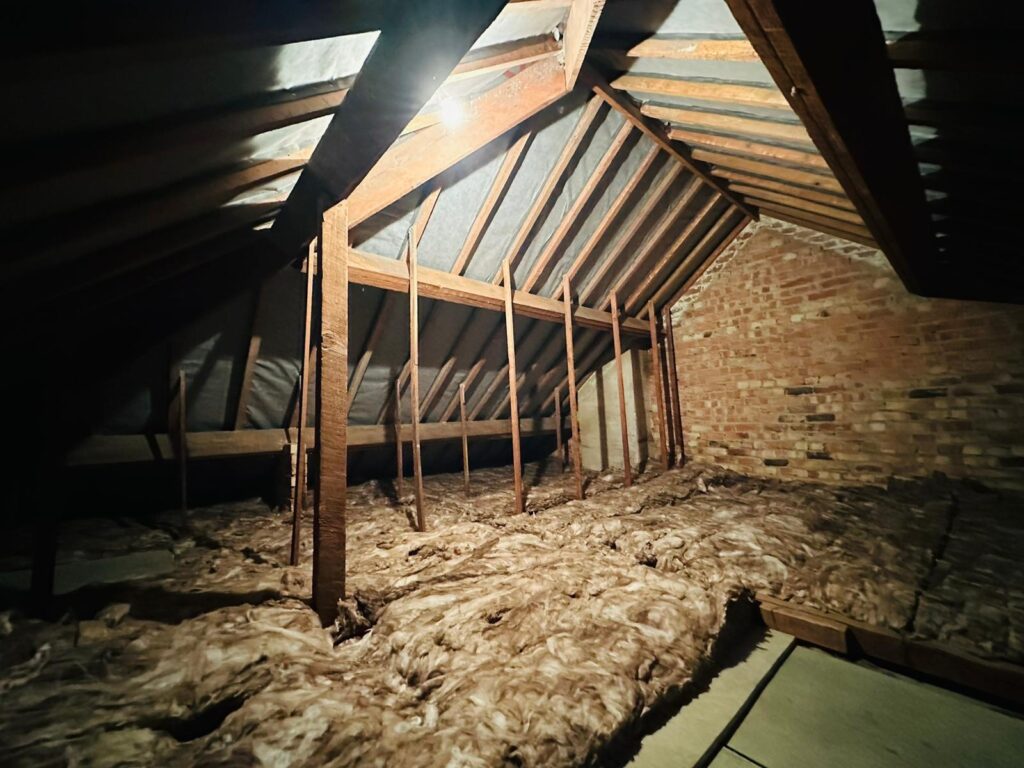
Here’s something that catches people out every winter: when you insulate your loft properly, the loft itself gets colder. That’s the point — the heat stays in the rooms below instead of leaking into the roof space. But it means any pipes and water tanks up there lose the background warmth they used to get from the house.
If they aren’t protected, the first proper cold snap can freeze them.
Why a frozen pipe is a big deal
When water freezes it expands. A frozen pipe can split, and you often don’t know until it thaws — at which point water pours through the ceiling below. Loft leaks are among the most damaging, because the water spreads through ceilings and into the rooms underneath before anyone notices.
What needs protecting
- Cold water storage tanks — insulate the top and sides, but not underneath, so a little warmth from the room below can rise into it
- Feed and expansion tanks for older heating systems
- Pipework running across the loft, especially near the eaves where it’s coldest
- Any pipe that runs through an unheated space such as a garage or outbuilding
Pipe lagging should be the right size for the pipe and fitted snugly, with joints taped and bends covered — gaps at elbows and valves are where pipes freeze first.
Don’t bury the pipes in the wrong place
A common mistake is laying loft insulation over pipes that run across the top of the joists, leaving them in the coldest part of the loft. Where possible, pipes should sit below the insulation layer, on the warm side, or be properly lagged if they have to run above it.
When we fit loft insulation, we look at the tanks and pipework as part of the job and make sure they’re protected rather than left exposed.
Other cold weather checks
- know where your stopcock is and make sure it turns
- if you’re going away, leave the heating on low rather than off
- check outside taps and isolate them for the winter if possible
Common questions
Should I insulate under the tank? No — leave the area directly beneath it uninsulated so some warmth reaches it.
Is it still worth topping up my loft insulation? Absolutely. Around 45% of a typical home’s heat goes through the roof — just protect the plumbing at the same time.
Do you cover my area? We’re based in Warrington and work across Widnes, Runcorn, St Helens, Newton-le-Willows, Golborne, Leigh, Culcheth, Lymm, Frodsham, Northwich and Greater Manchester.
Free loft survey before winter
We’ll check your insulation depth, your tanks and your pipework, and tell you what needs doing. Free survey, no-obligation quote, all work guaranteed.
Call 073 5919 5156 or get a quotation today.