Loft Insulation in Widnes and Runcorn: A Homeowner’s Guide
Just across the river from Warrington, Widnes and Runcorn have a mix of housing that’s ideal for loft insulation: post-war semis, 1960s and 70s estates, newer build in the expansion areas and older terraces nearer the town centres. Almost all of them have one thing in common — a loft that would benefit from more insulation than it has.
How much should be up there?
The current recommended depth for loft insulation is around 270mm of mineral or natural wool. Many homes in Widnes and Runcorn were insulated decades ago to 50–100mm, and that has often compressed or been disturbed since.
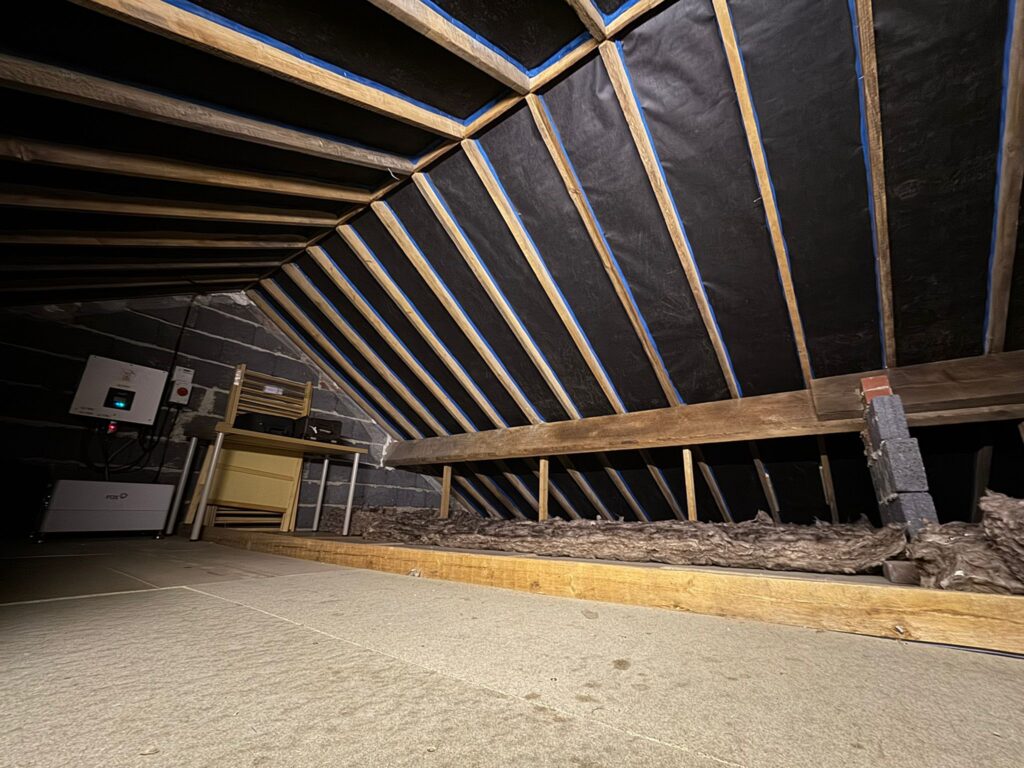
A quick check: if you can see the tops of the ceiling joists, you almost certainly don’t have enough. The joists are usually around 100mm deep, so insulation level with them is less than half the recommended depth.
What to look for in your loft
While you’re up there with a torch, it’s worth checking:
- Gaps and thin patches, especially around the hatch, where people have walked or stored boxes
- The eaves — insulation pushed into the eaves can block ventilation and cause condensation
- The hatch itself — an uninsulated hatch is a hole in your insulation
- Spray foam on the rafters — if you see foam stuck to the underside of the roof, that’s a different conversation, and one to have before you sell or remortgage (see our page on spray foam removal)
Why we often recommend eco wool
Our loft insulation service uses eco wool — insulation made from natural and recycled fibres. Alongside its thermal performance, it has some practical advantages in a loft:
- it helps regulate moisture, reducing the risk of condensation and mould
- it’s non-irritating and allergy-friendly, which matters if you use the loft for storage
- it absorbs sound, which helps on busy roads and under flight paths
- it holds its structure and keeps performing for years
Storage without squashing it
If you need storage, don’t board directly over the insulation — compressed insulation loses much of its value. The right approach is raised loft legs or a raised platform so the boards sit above the full depth of insulation.
Common questions
How long does it take? Most lofts are done in a day, often in a few hours.
Will it make a noticeable difference? Around 45% of a typical home’s heat is lost through the roof, so it’s usually the single most effective improvement you can make.
Do you cover my area? Yes — we cover Widnes, Runcorn and the surrounding area as well as Warrington, St Helens, Newton-le-Willows, Lymm, Frodsham, Northwich and Greater Manchester.
Free loft insulation survey in Widnes and Runcorn
We’ll check what you’ve got and tell you honestly whether a top-up is worth it. Over 30 years’ experience, all work and materials guaranteed.
Call 073 5919 5156 or get a quotation today.