
Cavity Wall Insulation in Warrington: Is Your Home a Good Candidate?
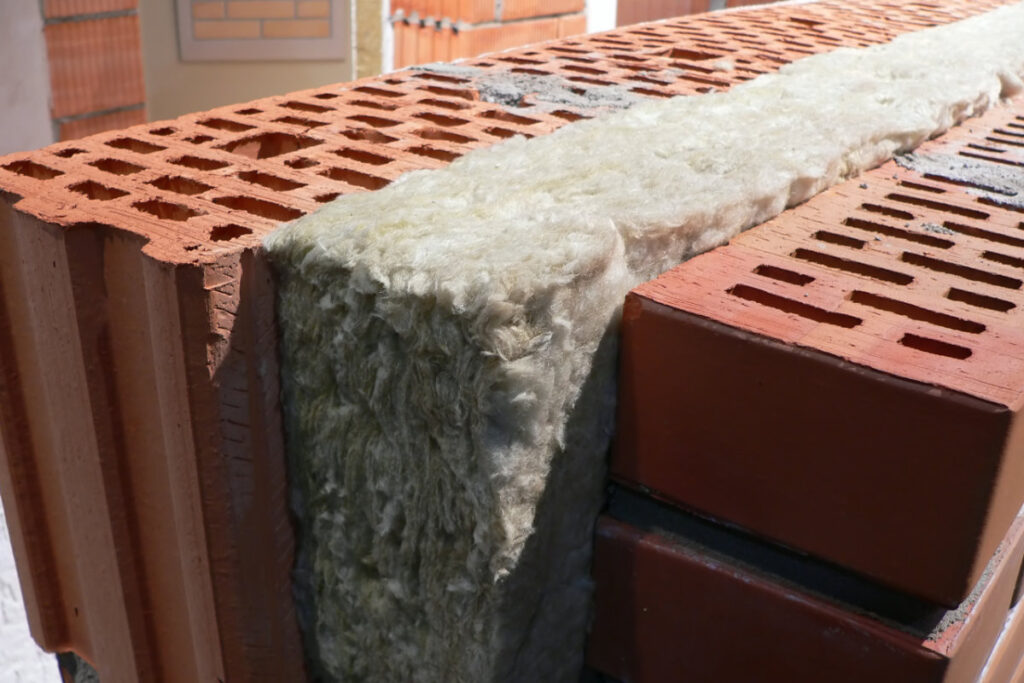
After the roof, your walls are the next biggest route for heat to leave your home — up to around a quarter of it. If your Warrington property has a cavity between its two skins of brickwork and that cavity is empty, you are heating the outside air every time the boiler fires.
But cavity wall insulation isn’t right for every property, and any installer who tells you otherwise isn’t being straight with you. Here’s how to work out whether your home is a good candidate.
Do you even have a cavity?
Broadly speaking, houses built from the 1920s onwards were built with cavity walls, and anything much older is likely to be solid brick. Two quick checks:
- Look at the brick pattern. If every brick is laid lengthways in a regular stretcher pattern, you almost certainly have a cavity. If you can see shorter “header” bricks appearing at intervals, the wall is more likely to be solid.
- Measure the wall at a door or window reveal. A cavity wall is typically around 260mm thick or more; a solid brick wall is usually nearer 220mm.
That covers a great deal of Warrington’s housing — the inter-war semis around Orford and Grappenhall, the post-war estates in Woolston, Birchwood and Great Sankey, and most of what’s been built since. Older terraces closer to the town centre and in Latchford are more often solid-walled, and those need a different approach.
What we check before quoting
A proper survey is not a five-minute look from the pavement. Before we quote for cavity wall insulation we check:
- Whether the cavity is already filled. A borescope inspection through a small drilled hole tells us immediately. Plenty of homes were done in the 1980s or 90s with material that has since slumped or degraded.
- The width and cleanliness of the cavity. Debris and mortar snots left by the original bricklayers can bridge a cavity and cause damp long before any insulation goes in.
- The condition of the outer skin. Cracked render, failed pointing or defective sills need dealing with first. Insulation is not a cure for a wall that is letting water in.
- Exposure. This matters in the North West. A gable end taking the full force of driving rain is assessed differently from a sheltered elevation.
- Ventilation and airbricks. These must stay clear and functional.
If your property isn’t suitable, we will tell you. It is a far cheaper conversation than the one that follows a bad installation.
What goes into the cavity
The material is injected through a pattern of small holes drilled into the mortar joints, which are then made good and colour-matched. Two systems cover most jobs:
Injected polyurethane foam completely fills the cavity from bottom to top, giving an airtight, watertight seal with excellent adhesion. It adds structural strength to the walls and is a low-VOC, odour-free formulation.
Bonded EPS bead uses polystyrene beads carried in an adhesive so they lock together rather than pouring out of any future opening. Beads flow into awkward cavities well and cope with narrower gaps.
Which one suits your property depends on the cavity width, the exposure and the condition of the wall. That’s a survey decision, not a catalogue decision.
Frequently asked questions
How long does the job take? Most standard semis and terraces are completed within a day, and it’s all done from the outside — no disruption inside the house.
Will the drill holes be visible? They’re made in the mortar joints and filled and matched afterwards. On most properties you’d have to know where to look.
My cavity was filled years ago and the house is still cold. Worth a survey. Older mineral fibre fills can slump over time and leave the top of the wall uninsulated, which is exactly where the heat goes.
What if my walls are solid? Cavity fill isn’t an option, but ProPerla wall coating can help with weatherproofing and thermal performance on exposed solid walls, and internal options may be worth discussing.
Book a free cavity wall survey in Warrington
H&J Energy Solutions have been insulating homes for over 30 years. We survey free of charge, we quote honestly, and all our work and materials are guaranteed. We cover Warrington, Widnes, Runcorn, St Helens, Newton-le-Willows, Culcheth, Lymm, Penketh, Burtonwood and the wider North West.
Call 073 5919 5156 or get a quotation today.