
Condensation and Mould in Warrington Homes: Why Insulation Is the Real Fix
Black mould in the corner of a bedroom, streaming windows every morning, a musty smell in a north-facing room. Most people reach for the mould spray, and it works — for about six weeks. Then it comes back, in exactly the same spot.
It comes back because the spray treats the symptom. The cause is a cold surface, and until that surface is warmer, the mould has everything it needs.
What’s actually happening
Normal daily living puts a surprising amount of moisture into the air — cooking, showering, drying clothes indoors, even breathing. Warm air holds that moisture happily. But when warm, moist air touches a surface that’s below its dew point, the water condenses out onto that surface.
That’s why condensation shows up in such predictable places: the coldest spots in the house. Behind wardrobes on external walls. In the corners where two external walls meet. On the ceiling below an uninsulated loft. Around window reveals. In converted lofts with a thin sloping ceiling.
Notice that every one of those is an insulation problem wearing a mould costume.
Why Warrington homes are prone to it
The North West climate does us no favours — a long, damp, mild-to-cold season where outdoor air is often near saturation, so drying out is slow. Combine that with a housing stock built to older insulation standards, and add the modern habit of drying washing on radiators through winter, and cold internal surfaces are almost guaranteed in an untreated house.
Three things that actually fix it
- Raise the surface temperature. This is the big one. Loft insulation warms the ceilings below it; cavity wall insulation warms the internal face of external walls. A surface that stays above dew point doesn’t get condensation, and mould can’t establish on a dry surface.
- Keep the walls dry from outside. If an exposed elevation is soaking up driving rain, the internal face will be colder and damper regardless of what else you do. A breathable ProPerla wall coating addresses that.
- Ventilate properly. Insulation and ventilation are partners, not rivals. Extractor fans that actually run, trickle vents left open, and a clear ventilation path through the loft.
The mistake to avoid
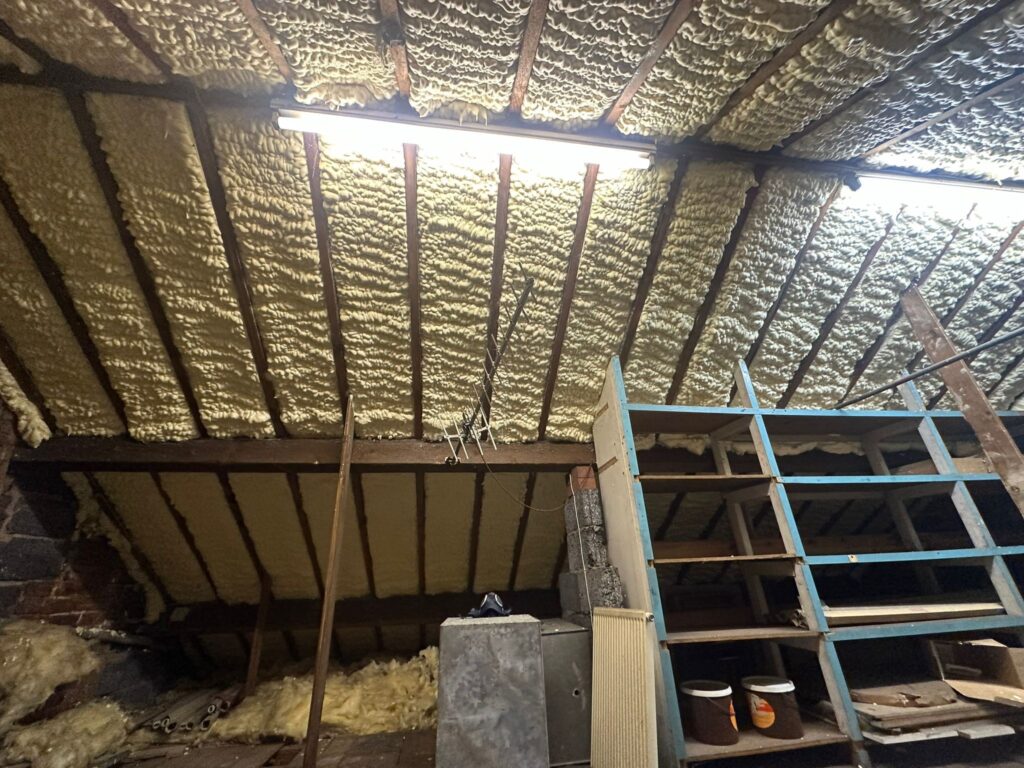
Sealing a house up without insulating it makes condensation worse, not better. So does blocking loft eaves with insulation crammed into them, or covering the underside of a roof with spray foam that stops the void breathing. If you have spray foam up there and you’ve started noticing damp or musty smells, that’s worth investigating — see spray foam removal.
The aim is a warm, dry, well-ventilated building. Not a sealed one.
Frequently asked questions
Is this rising damp? Usually not. Rising damp affects the base of walls with a tide line and is far rarer than it’s diagnosed. Mould high on walls, in corners and on ceilings is nearly always condensation.
Will a dehumidifier solve it? It manages the symptom and can help in the short term. It doesn’t warm the cold surface that’s causing the problem, and it runs on electricity indefinitely.
Why is it always behind the wardrobe? Furniture against an external wall stops air circulating over that surface, so it runs colder than the rest of the room. Insulating the wall is the permanent fix; pulling the wardrobe out a few inches is the free interim one.
I rent out this property — is this my responsibility? Damp and mould in rented homes is taken seriously, and the fabric of the building is the landlord’s responsibility. Insulation improvements also count towards your EPC obligations, so the work does double duty.
Free survey across Warrington and the North West
If the same patch keeps coming back every winter, let us look at why. H&J Energy Solutions have over 30 years’ experience insulating homes across Warrington, Widnes, Runcorn, St Helens, Culcheth, Lymm, Frodsham, Northwich and Greater Manchester. Free survey, honest advice, all work guaranteed.
Call 073 5919 5156 or get a quotation today.